
Designer John Pawson’s restrained genius has touched everything from hotels to museums and even monasteries. That diverse oeuvre is explored in Phaidon’s new book, John Pawson: The Minimal Home, the latest volume on the architect’s multifaceted career and life. Chadner Navarro sits down with the Royal Designer for Industry to talk about the meaning of minimalism, travel, and personal inspiration sources.

Minimalism is a popular buzzword these days. What does it mean to you? Has your definition changed over time?
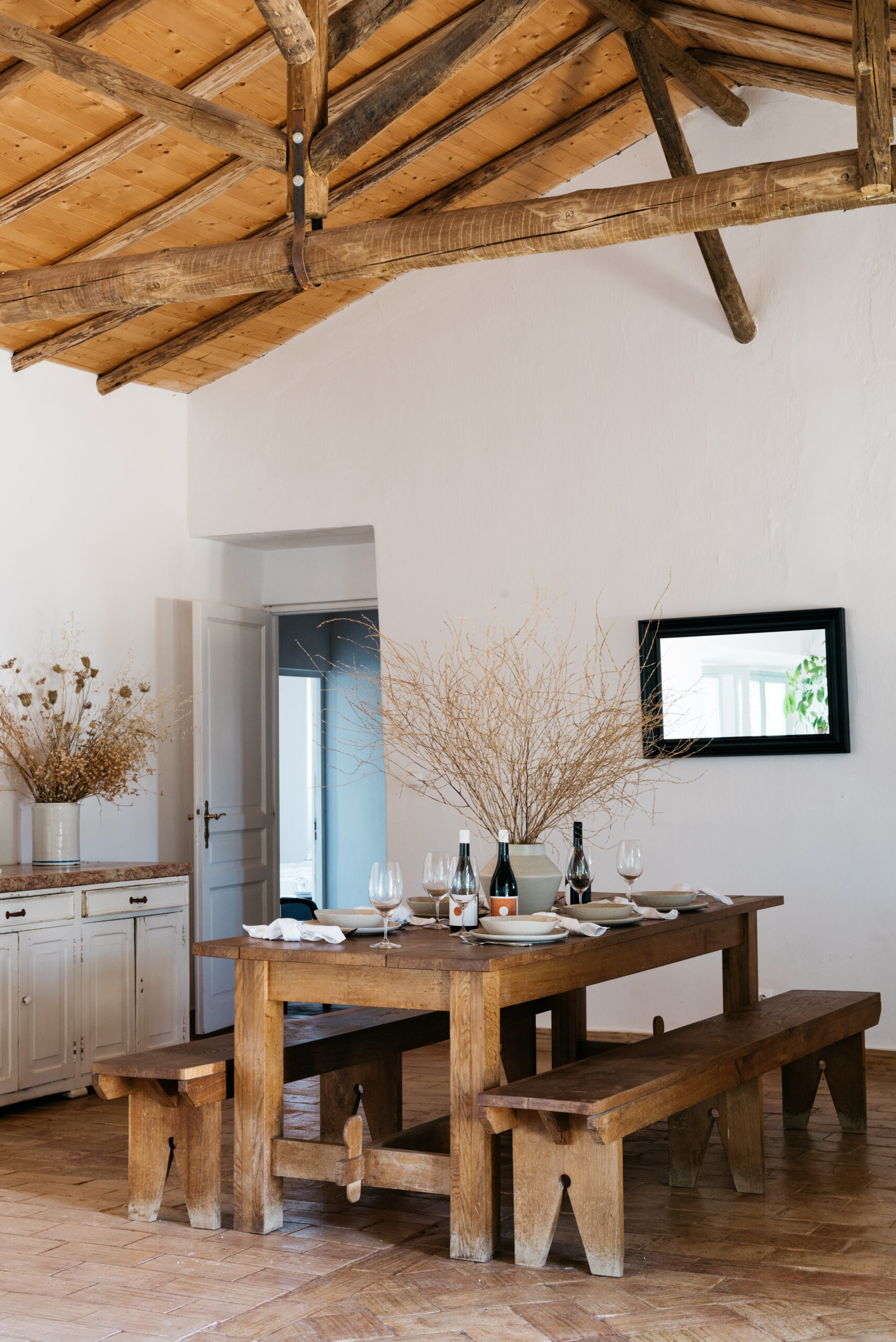
For me minimalism is not a style; it is a philosophy of space. From the beginning, my work has been shaped by the pursuit of what I characterize as the “condition of minimum,” which is the quality an object or space has when it is no longer possible to improve it by subtraction. This act of subtraction is the essential prelude to achieving the sense of ease and stillness that defines the feeling of being at home. I find profound comfort and pleasure in environments where it’s all about the light, the proportions, the surfaces, and the atmosphere.
Your work spans many types of spaces, including churches, which aren’t known for minimalism—quite the opposite, in fact. Was it difficult to translate your style for religious structures?
Regardless of typology, all my architectural projects begin in the same way—with a period of immersion in a site and its context. Each different vernacular is a response to the specifics of local conditions: climate, geology, natural materials, history, the character of the light. However many years one has been in practice, these are invaluable opportunities to learn—to push the thinking quite literally into new territory. The sacred commissions have brought with them specialized requirements in terms of brief and program, but the essential architectural challenge remains one of achieving a particular quality of space.


John Pawson: The Minimal Home explores your sources of inspiration. How do you find inspiration today?
My wife, Catherine, and I are keen travelers, and our journeys have been rich sources of inspiration over the years. This inspiration is rarely, if ever, literal. It’s about the emotional or visual experience of being in a particular building or landscape or condition of light.
What’s your take on souvenirs?
I always travel extremely light, and my bag is never any more full on the return journey. For me, the best way of remembering a place is in my head and through the medium of photography.
Speaking of travel, you’re well-known for your work with Ian Schrager on the Edition Hotels. How is a stay at Edition like living in a John Pawson home?
I think, in the end, what defines what I am trying to achieve in these projects is the atmosphere generated and the quality of the details. One of the things I always have in mind when I am designing a hotel is its choreography. When you arrive in your room, you don’t want to have to learn your way around it. You want the patterns of use to be instinctive, because this is key to feeling at ease and at home in an unfamiliar place. This is the difference between feeling you are passing through a space and feeling that you are inhabiting a space.

The concept of taste has never been more debated and yet it seems, today, taste is never more difficult to define. How important is taste to you?
From a young age, I was fascinated by the difference between the sort of spaces that make you feel something and those that don’t. The ruins of Rievaulx Abbey and Fountains Abbey—each a drive across the Yorkshire Moors from my childhood home—were touchstones for me as a boy. I experienced the extraordinary spatial and atmospheric charge of both places physically and emotionally. Of course, it is only later that you understand the qualities that have generated this response. This is what taste means to me: It’s the thread that runs through your life that embodies your preferences and thus your identity.
What is the hallmark of a minimal home?
Everything that you need and nothing that you don’t.